
“If you let a monkey hit the keys of a typewriter at random an infinite number of times, eventually the monkey will type out the entire works of Shakespeare.”
It is seldom a good idea to make your attention-grabbing opening such a tired cliché. But in this case, it’s appropriate. Though perhaps here, it would be more apposite with a little fine-tuning: if three monkeys were left alone with single typewriter, between them they’d have produced the script of Saltburn within a week; or perhaps it would do yet better justice to this awful attempt at a film to say: it’s what would result if a first-generation AI chatbot had watched Brideshead Revisited and The Talented Mr. Ripley, without reading the novels which had inspired them, and ‘had a go’ at coming up with something similar.

Lots of critics have given this film a good write-up. Believe me, they are all wrong. A friend of mine, an avid movie-goer, who watches two or three films a week, and misses nothing, strongly advised me not to go. Unfortunately, my other friend had been taken-in by the trailer, and my fate was sealed. Do not make the same mistake. Stay in and do something else; try a new recipe; turn off the tele and chat to someone with whom you rarely talk; write a script at your kitchen table – you might get a film made too. This, I can hardly bring myself to write the word film; this project, feels like the sort of thing that results when a conceited teenager is allowed to have their own way without a supervising adult present.
If you want a full synopsis, you’ll have to look elsewhere. Here’s mine: prurient, voyeuristic, wannabee-ogling of posh, privately educated, Oxbridge types. Overwritten from the start, with the weakest possible contrived ending tagged-on, in an attempt to justify the fan-girl, posh-porn, that had gone before.
There is principal of derivatives, which applies in this case: people who read Virgil and Homer, create books like Middlemarch; those who studied Middlemarch, wrote things like The Great Gatsby; and those who made a study of The Great Gatsby write novels like Mummy Goes Shopping.’ This film feels like it was created by someone who was in awe of everything that was superficial about the film and TV versions of Brideshead Revisited. For, in this paean to the posh, every line too was too on-the-nose, every syllable uttered, a cliché. Right from the Zadok the Priest opening, the script bounded from tired tropes, to plagiarisms, and back again. That music, such a lazy evocation of Oxbridge and English public schools in itself, immediately jarred, as being too similar to the opening of Another Country. As did the line stolen from Gosford Park which puts Oliver ill at ease amongst his easy-going hosts, that ‘Englishmen serve their own breakfast;’ all the way to the denouement, where they tried to reveal a cold blood killer like Tom Ripley, but had forgotten that to get away with that, you have to go to the trouble of building a simmering tension first. Every single piece of staging, was either a child’s-eye view of what living in those circles was like; or a straight copy from similar films she revered. It attempted to concoct a world of the landed gentry living in their assumed glorious, nonconformist, other worldly, timeless, exclusive bubble. It contrives to present every woman as a bo-ho, theatrical, unconsciously other, and erudite beyond sensitivity. And dear me, even this: a patriarch who was once beautiful and dashing, with a butterfly mind, who who has entered a charmingly detached, middle age. It delivers on every single chestnut, and formulaic platitude, of the beyond-the-likes-of-us, observation of the upper classes. It’s a posh-porn sketch show.
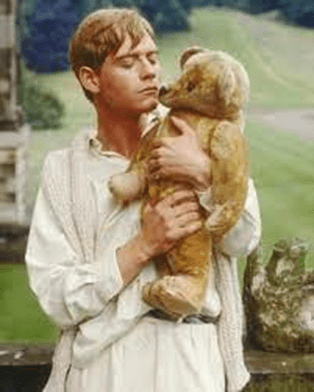
Well, Acts I, and II were. And they took up well over an hour of film time. And then, something which was more akin to an epilogue than a third act, was added.
The film until then, had been devoid of substance, there had been no plot, and no clues had been laid. No third act was going to redeem it. But this? This? It was worse than what had gone before by a margin. It ‘hindsight’ dropped in a couple of hints to suggest a plan that had never previously been on the cards. It made it come over as if it had been knocked-up on the way to an emergency producer’s meeting, called to rescue the project. For those of us who felt let down by the recycling of long-established tropes that we had seen many times before, we watched this ten minute, supposed justification of the project, in open-mouthed wonder. Wonder in the sense of being unable to understand the sheer temerity of the writer to try and get away with a plot so lacking, so vacuous, so insulting to adult viewers.
As a whole, the whole film came over as an 11-year-old’s essay, first rejected for a lack of suitable conclusion, to which which a new ending was added without changing any of what had already been written.
In Rye Lane, Raine Allen-Miller in her directorial debut, does exactly what you hope a new film maker might do; it’s originally staged, brim-full of smart and funny ideas, quirky in the best sense of that word, and ambitious in the very best sense of that word – full of well thought-through risks, and delivered with the lightest touch, yet always with an eye to moving on the action.
Emerald Fennell, on the other hand in trying to create an epic, has produced the sort of thing that results when teenagers are allowed to play with the dressing up box on rainy afternoons.
 Dickie White's Diary
This is absolutely on the button. It felt like a children’s film. I felt embarrassed to have watched it, and I sneaked out before the credits, hoping that no one would spot me. Especially, anyone in the lobby, who had been to see a different film – I would have hated to have had to admit that I had been to see this. I think of it now, as a humiliating experience.
Thank you Dickie, whoever you really are, for speaking up honestly like this for us. This is the only place where I’d feel brave enough to admit that I had been to see Saltburn. Keep doing it for us – we need you.
LikeLike
Too right. Unadulterated, self-indulgent shite. 100% vanity project for a genre which, by now, we have become heartily sick of every trope and cliche.
LikeLiked by 1 person