
The reason I don’t enjoy period films that have a soundtrack of music which is yet to come for the age in which they are set, is not entirely about the jarring incongruity of the moment the music kicks in; nor is it that the generation below me has now come of age, and is making its own films, and, it seems, they are inspired by the sort of music from the 1980s that I found unspeakably naff and vacuous, even back then. Songs which (as Marty Supreme’s use of Tears for Fears illustrates only too well) came with the faux-profound lyrics of indulged children, who came of age in that tasteless era of new affluence, and laissez-faire everything. No, it is that by doing so, it breaks the spell of film —that for the duration of the movie, we, audience and those who stage it, make a pact with each other that we are going to go along with the lie that the then they are showing us, is the now we are watching. And so, the use of a song that has yet to be heard back then, peaches on the deal.
But that’s not why I hated Marty Supreme. That aspect of it merely helped me out.
Maybe this was a deliberate act of vandalism to the film-goers code too. It broke the first (the only?) rule: THERE WAS NO ONE IN THE STORY FOR WHOM WE WERE ROOTING. Marty was obnoxious —a person we’ve all encountered; one who’s motivated only by personal gain, and who will impose an unwanted negotiation on someone who has not invited it; or imposed it on someone, who, shortly before, has been callously exploited, or otherwise let down, by Marty, who then pushed and pushed his case to a point where the final terms turned unconscionably in his favour. Then he breaks the deal for a better outcome.
That was our protagonist, and the supporting characters weren’t much better. Marty Supreme certainly broke the deal for me. I hated everyone minute of the two hours thirty, and every last one of the characters (bar the dog who was given the rawest of deals).
Marty Supreme, rating: 1 ⭐ (out of 5).
Into this short review, I am going to insert a TV drama series too, because it seems to fit with the themes. Lord of the Flies. I have a bit of a relationship with this novel. It was, with Brighton Rock, one of our two set texts for English O-level. The two years devoted to O-level prep in our school were marked by the school’s transition from a grammar school into a comprehensive. The chaos of catastrophic failure to plan for the first year, was only bettered by the following year’s disaster of a failure to execute.
We experienced something in the region of ten temporary English teachers over those two years, and we never got beyond the occasional dip into either book in what were nominally referred to as lessons. It is a period of my personal history that imbued in me such an enduring instinctive visceral hatred of any form of petty bureaucracy, that by some measures, I can better be described as a domestic terrorist. That’s maybe why I chose to double-down on the chaos, and didn’t read beyond the first few chapters of the book. Golding’s inspiration for writing it, it’s said, came from his own negative reaction to reading Coral Island, and all its idyllic derring-do. Maybe, like his reaction to Coral Island, I just didn’t like the story —that I found his invention to be an unrealistic contrivance with which to present his unreasonably bitter schoolmaster’s perspective on the world. It seems appropriate, writing this, that that English O-level experience would stand as the foundation block of what would become the only real skill that I’ve ever came to possess —that of making virtually no information at all stretch way beyond what should have been its breaking point.
But don’t think that I went into the watch with a bad attitude —I was as anxious to know what happened at the end, as the next person.
Like Marty Supreme, there was something oddly out of kilter about this Lord of the Flies adaptation. It bore all the production quality trademarks of post-PP drama series (PP here, not as it’s used below, but in its original ©dickiewhiteenterprises copyrighted and defined sense of post-Pride and Prejudice —where TV dramas were no longer written by jobbing writers, but instead, taken on by real screenwriters, whereby they suddenly switched from endless weekly episodes, into long films broken into six one-hour segments). But, inspite of all that, it was a production oddly out of time with the era in which it came to screen. Where there had once been a time when a drama with an all-male cast of privileged white boys and their tribal shenanigans would have cut it, there seemed something slightly distasteful and anachronistic about airing it now. It felt like watching Another Country, or If, or some other upper-class obsessed bullshit that we used to have to sit through. We’ve moved on, haven’t we? I feel inclined to repeat a rhyming couplet that was often said to us in the context of watching cricket test matches on the tele with our gran (a cricket afficionado) “If you’re a toff, you can bugger off,” when one of theirs, was preferred to one of ours, despite being several levels more useless. Then she’d add, “We don’t need you.”
I take Lucy Mangan’s (The Guardian) point:
What, could possibly have prompted the commissioning of an adaptation of a post-war allegory that throws into dreadful relief the impulse to tyranny, the fragility of democracy and the brittleness of our veneer of civilisation in this shining year of 2026? One that takes place on an island in which all normal social rules no longer apply and the inhabitants are protected from any punishment or consequence, no matter what appetites emerge?

But, we’re no long curious about what creates the sort of twats who turn into Bullingdon Club members, are we? I mean, sure, useless people like Emerald Fenell (see below) through execrable projects like Saltburn, still possess an adolescent crush for cruel, emotionally absent, entitled ghouls, but the rest of us —we’ve been through the genre so many times by now, from the abundance of Brideshead reprisals, to what, if Saltburn hasn’t taken the crown, The Riot Club, was its nadir and represented the end of its form. Let’s face it, the myth of all that privilege that was once so mysterious, and beguiling (and in Saltburn was still its premise) has been blown for good. We no longer watch television stuck to the screen by the silvery mucus snails’ traces of want and longing, desperate to see how life is really lived by those who can. We now use drama to tell those out of touch ingrates that their cloistered advantage is no such thing —rather, that it’s a handicap.
And, worse still for them, there ain’t no new Byrons coming to save them and their complacent assumption that barely-motivated iconoclast is a status waiting for them to claim could they only be bothered to. Them days is gone love.
Lord of the Flies, rating: 3⭐ (out of 10). [-1 for having such a tin ear as to the times we live in. And minus another 1 too, while I’m at it, for the join-the-dots script]
The happy ending that I can give you, is that related by (the brilliant) Rutger Bregman who looked into a real-life incident where, in 1965, a group of schoolboys were marooned on a deserted island for over a year. The result was more Coral Island than it was Lord of the Flies. Perhaps that’s because, as Bregman tells us: schoolmaster Golding was, “…an alcoholic, prone to depression [who] declared towards the end of his life ‘I have always understood the Nazis, because I am of that sort by nature.’ And it was ‘partly out of that sad self-knowledge’ that he wrote Lord of the Flies. In his role of privileged petty bureaucrat, we might add. Some of us do. [https://www.theguardian.com/books/2020/may/09/the-real-lord-of-the-flies-what-happened-when-six-boys-were-shipwrecked-for-15-months]
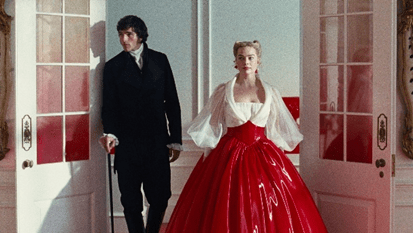
If there is no one in Lord of the Flies or Marty Supreme to root for (Piggy, mere second to an antagonist, does not make it to the end of the story), this “project” takes all that a stage further: it’s a film without even a director to root for.
There are so many brilliantly atrocious reviews of Emerald Fennell’s pitiful stab at Wuthering Heights that it seems slightly redundant to say anymore about it.. I’ve provided extracts from my favourite reviews below, but to them I must make a small point that has been omitted.
It is bad enough that Fennell continues to be treated like an indulged child who’s found the dressing up box; and worse still that the Sunday afternoon parlour productions, too long tolerated by her parents, have turned into publicly-aired passion projects to be endured by the rest of us. But the real tragedy of this piss poor indulgence of her still not fully developed adolescent sensibilities, is that in Emily, there was a really excellent re-telling of the Wuthering Heights story, cleverly wrapped up in a conflated Emily Bronte biopic, as recently as three years ago. That was a proper film, with a fresh take on a beloved story that only added to the reputation and standing of the original novel. All of it wonderfully staged by Frances O’Connor, a coming film maker worthy of the title. Hopefully, the reviews attracted by this awful mess of a teenager’s wet dream, will mean that those minded to finance filmmakers’ passion project proposals from now on, will start to look beyond the merely privileged with big ideas.
“Wuthering Heights”, rating: 0⭐ (out of as many as you want).
Clarisse Loughrey (The Independent)
Fennell’s stated intention was to capture her experience reading it as a 14-year-old:
In her script, she has conflated Heathcliff’s chief abuser, Hindley, with Cathy’s father, Mr Earnshaw (Martin Clunes), and made Cathy and Heathcliff equal targets of his violence. This, in turn, flattens the entire story into that of a poor maiden who escapes her dire circumstances by marrying a wealthy man, Edgar, who loves her but is dull, all while she yearns for her soulmate who has not a penny to his name. Their characters feel so thinned out that their performances are pushed almost to the border of pantomime. She’s wilful and spiky. He’s rough but gentle. That’s about it.
She uses the guise of interpretation to gut one of the most impassioned, emotionally violent novels ever written, and then toss its flayed skin over whatever romance tropes seem most marketable. Adaptation or not, it’s an astonishingly hollow work.
Danny Leigh (The Financial Times)
…As the sexual tension cranks, the mood feels like and arthouse Carry on, with the lingering shots of gloopy egg whites.
Sorry people, but the kink proves mostly strait-laced, the S&M more like M&S.
Jo Ellison (The Financial Times)
Fennell’s Wuthering Heights is a maddeningly slight, pink turd of an adaption.
If only her interpretation was as demented as Brontë intended: this version is limp and curiously boring, a series of jump fucks designed for TikTok memes.
And Clarisse Loughrey again, to finish:
Perhaps there’s a more graceful takeaway from all this. If “Wuthering Heights” were true to the spirit of what it feels like to read Wuthering Heights, at any age, it wouldn’t be a film you could market with brand tie-ins and Valentine’s Day screenings.
Eyes face forward,
Cubby Begge
 Dickie White's Diary
“the generation below me has now come of age, and is making its own films, and, it seems, they are inspired by the sort of music from the 1980s that I found unspeakably naff and vacuous, even back then. Songs which (as Marty Supreme’s use of Tears for Fears illustrates only too well) came with the faux-profound lyrics of indulged children, who came of age in that tasteless era of new affluence, and laissez-faire everything.”
💯😂
LikeLike
Maybe, like William Golding, you recognise a similar propensity towards blackness at your core, and that’s why you find it easy to see in others.
LikeLike
PPPS – “all that carry on”!!!
LikeLike