
Friend of the channel, Hans Loë, has kindly agreed to provide Dickie White Publications with exclusive early access to his current series of short stories which re-work our best loved myths, fables, and fairytales in a modern setting. Below is part one (of three) of the story he has called:
TRUMPELWILTSKIN*
*If you’d prefer to see this story all in one place, rather than serialised,you can get it here, in book form, for 0.99 of whatever you’re used to: [https://amzn.eu/d/0bNxBqPE]
PART ONE
Deep into a cold dark night in winter, King Donald woke with a start from a restless slumber, as a burning solution of half-digested cheeseburger surged up his worn and tattered oesophagus, and into his tiny mouth.
He panicked, and started to shout for assistance but as no one was allowed to sleep within four doors of his bedroom, his cries went unheard. He patted the bed around him for his panic button and phone; they’d been there at five a.m. when he’d been trothing.
“What’s going on? Who’s trying to get me? They were there in my dreams, and the next thing, they’d shot their poison into my mouth. Where’s my phone?”
He found it in a fold, and he was about to message a helper, when an imp appeared.
“Can I help?” asked the imp.
“It’s my enemies,” cried Donald, “they’re everywhere. Now they’ve found a way into my dreams. They torment me. They shout things like you’re not King Donald. Then they shoot stuff into my mouth and leave without paying or anything.”
“How do you think they’re getting in?” asked the imp.
“Hold on a minute, buddy,” said Donald. “Who are you? You might be one of them, for all I know —you’re certainly small enough. Hey, you’re not one of those DEI hires, are you? We don’t have any of them round here apart from those in the spa. Made for the job, they are. We only hire the best, even the DIYers.”
“Not me,” said the imp, “I’m independent —please tick the like, and subscribe. I’m an imp, officially an imp-Bot. My real name’s Trumpelwiltskin.”
“Trumpel? There’s a Trumpkopf in my back story… from the German line. They were all professors. You know, a behind name, like my very good friend Andrew,” said Donald. “He’s a no-name prince. But I cut him —when everyone else still loved him, by the way. Check it out —it’s on the record. Maybe it means we’re going to get along?”
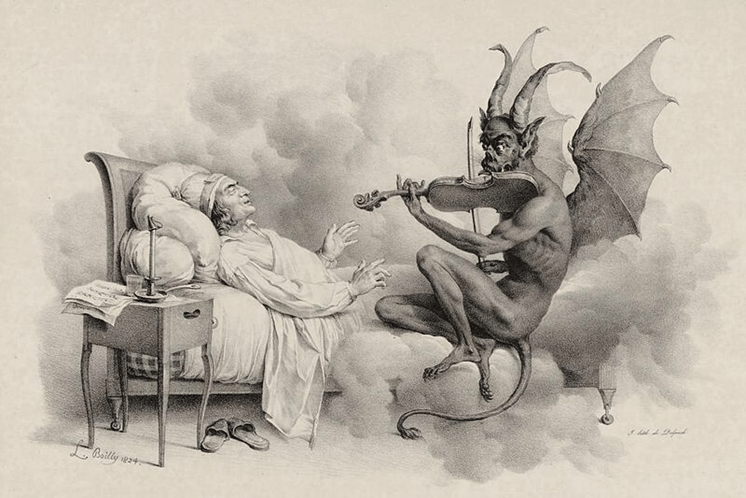
The imp shrugged, then took a few steps away towards the window, “Do you want me to help? You know, with the dream stuff?” he asked.
He hopped up onto the sill, pushed the window open a little further with his foot, then turned to face Donald again. “How do you think they’re getting in?”
“My phone! They’re all coming in through the back of Troth Essential when its late and I’m here on my own.”
“And how do they do that?” asked the imp.
“Easy, they pretend they’re my supporters. My base, it’s the best base, no one’s ever seen baseness like it. There’s loads of them so it’s easy to sneak in. They just wear our caps, and walk right into Troth. Have you seen them? Donald I, Christian King, they say. Everybody loves them.”
“That shouldn’t be a problem,” said the imp.
“But look at you Diddler, you’re just a little imp.”
“I told you,” said the imp, “I’m an imp-bot. I’ve got algorithms and AI. I can do anything.”
And so, the imp told Donald all about his tech company; how it could filter out most of Donald’s tormentors during the signup process to Troth Essential; and how, if any of them did manage to get through that stage, they would be tracked down, and once identified, banished from all digital platforms forever.
“A bit like the stocks you have outside the castle, but an online version that they can never get out of,” said the imp.
“I like that,” said Donald, beginning to feel normal again. “It’s the only way bad people learn. Very bad ones. Humiliation!” he said, rising to a crescendo in his excitement.
“Hold on a minute, liddle Diddler.” He said sliding down from his bed. He landed with a thump which made the floor shudder, and scared the imp. “How much is this going to cost me?”
“I have no need of your Donald-bills,” said the imp.
“I like that,” said Donald. “But you must be after something?”
The imp took a moment.
“We imps are seldom understood as we should be, and we lack real friends and supporters, in the way you have them. We’re never entirely sure whether people really like us, or… ”
“I hear a lot of that,” said Donald.
It encouraged the imp towards a rare moment of candour. “What I wish for more than anything else, is to find real people to support me in what I do. Real followers, and lots of them.”
“I’ll tell you what Diddler, you get Troth Essential safe and secure, then we can use your algorators to bring them over to your apps to play games and stuff. How does that sound?”
“That sir, would be a very generous payment, but it would work even better if they had even less choice about alternative sites to go to.”
“You mean… I like your thinking, Diddler. That would work well for both of us, eh? Fetch me a Sharpie from that drawer over there, I feel a King’s Proclamation coming on.”
“And by lunchtime,” said the imp, “I’ll have Troth Essential looking like Little House on the Prairie.”
Donald slumped back onto his bed, drifting into what would be his first good sleep of the week, “I really am starting to make the kingdom great again,” he said, as he drifted away into unconsciousness.
The road that began at the main castle gates, led directly to the closest town in the region. And half-way along that journey, after ten minutes or so, where the road bent as it met the river, there was a grassy lane; and were you to turn left onto it, you would arrive by and by at a very small hamlet. Nowadays, only a few houses in the hamlet were occupied, and one of those was a second home said to be owned by Farqhuar Failson who worked in the media. Though he no longer visited the castle after that thing he did to a bagel when he was in Moscow making a documentary that time. Under Donald, the state troops had really upped the cultural policing side of their game, and Farqhuar was nothing if not a coward.
In one of the few houses in the hamlet that was occupied, lived the miner and his daughter, Agathe. Their house was closest to the old mine that the miner still worked. It had long since given up its easy treasures, and though the miner and his wife had never been wealthy, there was a time when they got along well enough with the trickle of income that the mine yielded.
Lately though, the miner and his daughter barely scratched a living from it. His old tools were blunted and worn from a lifetime’s work, and with no money to replace them, they slowly declined, like the miner himself, into decrepitude. That he did not have the money for such basic upkeep tells you all you need to know about why the mine lacked the investment to bring up its deeper seams.
His grandfather had been the first to acquire mineral rights over the small piece of land, and there had always been talk of riches lying deep beneath their feet. But the miner knew now, if indeed they’d ever been more than the sort of stories that poor families told each other to keep battling on against the odds, he would never live to see those riches brought up to the surface.
Nor would his daughter. For this work to which he’d devoted his life had dragged her into penury with him. And capable as she was in so many different ways, she was not, and would never want to be, a miner, let alone a miner’s wife.
It was a tea time in the very early days of spring —perhaps a month or two since the king and imp had first entered into their co-dependent relationship.
The miner had put away his tools for the day, and he’d washed and changed from his dusty working clothes, before coming to sit at the little table in the kitchen which Agathe had set for tea. She poured him a cup, then set down the pot, intending to go and fetch the toasting fork.
The miner reached out, taking her gently by the arm to bring her back to the table. “Sit down a moment, Agathe,” he said.
“Oh dear,” thought Agathe. “That bad.” She’d expected this chat for a little while now, hoping that when it came, she would be sent into service at a grand house, or even the castle itself, though not a neighbouring farm, or anything like that. But she knew that her father had hardly ventured a mile beyond their house for over a month now, so it puzzled her what he might have on his mind.
He brought his head up to look at her directly with his old pale eyes, took her hand in his, and barely able to speak the words, told her that she must go to the town the next day, to seek a price for their last nugget. He took it from his pocket and put it on the table between them.
Such a tiny insignificant thing. Something which might have lay hidden beneath a stone, or covered in dust and never been found at all; and there it was now, their single hope of salvation.
“What about the riches that are still undiscovered?” she asked. “Those that you and grandpop used to talk about? That’s why you’ve kept on toiling in a mine so barren in what it still holds at its surface —that one day you’d find a way to reach the deposits below. That is why we’ve suffered so, all these years.”
“Yes, my girl,” he said. “All that is true, but what is also true, is that the little nugget that lies between us on the table, is our last, and we must sell it so that we can live.”
All this confused Agathe. She knew that times were hard; they were for everyone, but she hadn’t realised that they stood so close to destitution. She had a thousand questions for her father. Why wait ‘til now? What will we do when that money is spent? Who will buy this worthless property from us? Am I to look for work in the town today? A thousand questions, all racing round her head. And, yet at the same time, she felt such pity for him too.
He’d put off telling her to save her from worry, she could see the despair and conflict etched in his face. She could not condemn him with harsh questions. She could see that he’d already done all that to himself, leading to this moment.
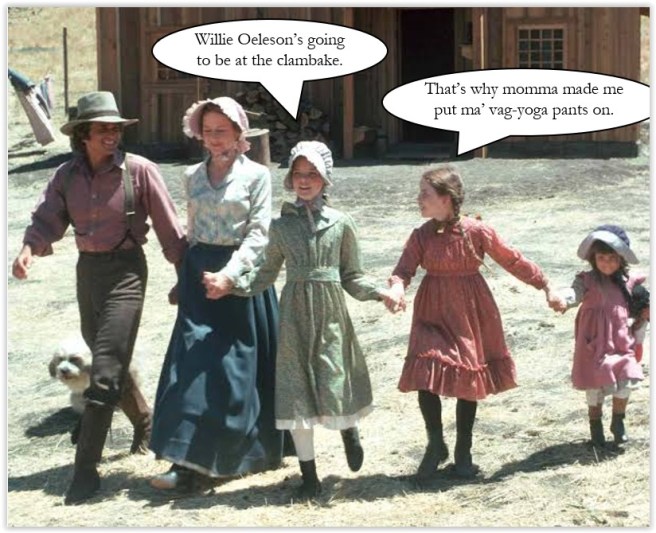
Then, suddenly, she found herself saying, “It’s our rainy-day money father! We can’t.”
“But gold is fetching such a good price just now,” said the miner.
“In which case father, keep it. Tomorrow I will make an appointment for you at the bank, and that nugget, rather than buy us groceries, can be the deposit on a loan which will allow you to invest in our mine. Properly invest, sink new shafts and open new seams —those hidden below the surface beyond the places your pick and shovel will reach.”
She was a wise girl, his daughter, and though a gentle and sweet natured creature, she had a spirit about her too. She possessed an instinct that made her step forward to face difficulties, not shrink from them. Her mother had been the same.
“But for what, daughter? You are no miner, and when I am gone, who will run the mine then? And there will still be a loan to repay. And it may take us years to find the rich seams beneath us.”
“That will be a challenge for me to meet,” said Agathe.
They ate a little, and chatted, and during that talk the miner agreed with Agathe not to sell the nugget at this very moment, but to keep hold of it with a view, one day soon, to use it to secure investments with which they could expand their little mine.
“But,” he said, grief etched into his face anew, “If we are not to sell our nugget, then I must ask you to do a terrible thing.”
Agathe blushed. “I’ve been on my last blind date with the unschooled, horny-handed, creatures of toil,” she thought.
“Agathe, my love, I must ask you to sell your mother’s necklace and ring.”
Agathe immediately clasped the ring hanging on her neckless. It was made from the very minerals mined at this property; forged in her father’s own workshop. Her poor dear mother. At least they were spared having her seen them reduced to this.
She made no sound.
“We have nothing else,” said her father.
Early the next day, Agathe was walking in to town. She had taken off the jewelry because she didn’t want other shoppers to see her reduced to selling her valuables at the pawnbrokers. Her little basket swung at her side, with the necklace and ring safely wrapped up inside her pocket. She appeared to all the world as if she was just out to buy a few provisions.
As she arrived in the town, though it felt like a normal busy shopping day in some ways, she sensed a different air to the push and the shove, this morning. It had been almost three weeks since she was last here, and something had changed.
She looked about her to see if she recognised anyone, and seeing no one, drew a deep breath and went to do what her father had bade her do. But as she turned the corner from the main square, into the street where the pawnbroker had his shop, an unexpected sight met her eyes. The queue from the shop stretched back almost to the square itself. And though it made her feel a little better about what she was about to do, she still pulled up her hood, and squashed herself in on the wall-side of the queue so that she might not be seen from the town square as she waited her turn.
It moved glacially slow. And the poor people in front and behind her, masking their shame, just as she did, did not chat with each other, as they would if they were in the same queue at the bakers, and so the time dragged all the more. She had a few lines prepared, in case they did —that her father had found some bits and pieces he no longer valued in his workshop, and some sweepings and tailings from the mine, that were to be cashed as the gold price was doing so well, and the money from those worthless trinkets was to be put to better use for new equipment.
But nobody talked.
Over an hour they stood in that queue. Not a word spoken as it inched its solemn way along the wall opposite the pawnbroker’s shop. Only when it turned left to cross the road and head towards the shop itself, were the first bits and pieces of chatter heard, all passed on, like whispered secrets, by people anxious not to miss the next bulletin coming by talking too loudly.
“Only precious metals,” was the first thing she heard. She wasn’t sure whether there was enough gold in her mother’s jewelry for it to count as precious. How shameful that would be, to have them inspected, then rejected. “Oh, why didn’t I bring the nugget as father wanted me to!” she said to herself.
Suddenly there would be a flurry of excitement as a piece of news spread through those at the head-end of the queue. And as they inched forward, she could see that as each new person left the shop, a new piece of information would be passed on, re-animating all of those who were close enough to catch it, or here the whispers of their neighbours.
“He’s paying a fortune for precious metals. Especially gold!” was the first thing she heard.
And then, a few moments later, “But only while his money lasts.”
Within a few minutes, another wave of emotion surged through the crowd.
“Send a boy to the castle, and have them run the Mint’s presses if you need money!” someone shouted.
He knew his words would not carry to the shop, but the frenzy created by the news, and the fear of just missing out, made people behave in a way that they would not dream of doing, were life in the kingdom as they normally knew it.
As she came within range of the shop, and got her first glimpse of customers entering and leaving it, she sensed a different mood. They weren’t so excitable now. And some of the people ahead of her, with no precious metals to trade, now finally certain in the news that they’d only heard in whispers until then, had abandoned their project for another day.
That meant that those who remained must have held gold and silver, or at least a precious stone or two, yet as they left the shop, they didn’t seem as delighted with their prices as those ahead of them had been —disappointed if anything, though they spoke less, and it was difficult to ascertain what had changed so suddenly.
Eventually the news arrived.
“He’s running out of money. He’s offering less.”
“Then why did they sell?” asked a small boy standing close to Agathe, of his mother.
“Because they have to,” said his mother. And to his puzzled face she added, “they must eat, and so they take whatever they can.”
The mood raised a notch just before it was Agathe’s turn in the shop, when the news was heard that someone was indeed going to the bank, and if the bank had none, then to the castle, to have the Royal Mint produce more, much needed, Donald-bills.
She approached the counter, expecting to find a fierce and mean-spirited man, but she was delighted to see the very opposite. To her question, “Do you still have any money left?” the sad and wearied man looked at her over his spectacles.
“More is coming.”
He seemed not to mean the smile with which he delivered the news, then followed it with, “But it will have halved in value by the time it gets here.” The man let out a long, tired sigh, as if it was him alone responsible for the bad news.
“Then what am I to do?” asked Agathe, barely able to contain her frustration.
“If you can,” said the shopkeeper, “My advice is that you to keep all your metals, even those that aren’t gold and silver. They are worth more than money now. And it’s only going to get worse.”
He clasped Agathe’s hands in his as he said the words, and gestured with his eyes for her to leave so that he could deal with the people who couldn’t so easily heed his advice.
It made for her the decision that she’d been reluctant to commit to. Now it had reason —it wasn’t just a feeling any longer, it was advice from a good man, who knew what was best.
Perhaps it was because she’d been released from the torment of an invidious decision to make; perhaps it was because she was simply a good and honest woman, but she sang and skipped as she went on her way. For all that they were poor, disappointed by their experiences and beset by worries, she maintained a great love of life. Of just being alive. And at last, after hours in that wretched queue, here she was, returned to it all again.
She was about a mile or so from the town, and still more people flooded towards it than went in her direction. The incomers travelled on the news of a new batch of Donald-bills having been printed, and those making their way home, although disappointed with their morning’s work, were thankful that they’d got in early, and secured their price during the few hours that the Donald-bill still held yesterday’s value.
Amongst this throng of people, a man latched on to Agathe’s singing, and then another, and another, until in the end she felt that she must put down her basket, and stop to sing to the crowd.
She had a beautiful singing voice, and the more she sang, the more the people applauded, and with that, the more she grew in confidence, and the better it got. There was something so light about the way she did it; her voice seemed to float through the air to their ears.
It possessed an ethereal quality, by which it revealed her inner nature —that of a pure soul who would put the interests of anyone or thing in need, in front of her own. The crowd could hear it in her singing; and stopping to listen, saw it in her face. It was but a passing moment, but while they shared it, they saw that they shared so many other things that were to be cherished about the world they all lived in too.
Those who could afford to, seeing her patched and shabby dress, gave her coins; others food. Others just a smile of gratitude. And it all went to soften the blow of the unsold jewelry when she returned home to her father.
He couldn’t quite embrace the news about gold in the positive way that his daughter presented it, but he would in time —she would see to that.
The imp had, on the whole, enjoyed the first few months of his new relationship with Donald. His userbase had grown; his competitors had mostly disappeared; and though it was difficult in these times to drive up subscriptions from the ordinary people who used his apps, they held their own. For his were just about the only games in town.
For these privileges, he had tightened up the registration procedures on Donald’s own social media site, the appallingly badly designed, Troth Essential.
But a reckoning was coming.
It had been brewing for a while, and the townsfolk, well they had felt the sting of hardship already, but now it was trickling upwards like a rising flood —that had begun in the sewers.
“What does this mean?” asked Donald.
They had fallen into the habit of meeting in the dead hours of the night, just after re-runs of The Waltons. It was the imps preferred time of day for working, and for Donald, well it kept him off his phone, and occupied him when he needed it most.
Donald was holding an envelope in his hand, from which a letter and a flurry of newly printed Donald-bills had fallen. “Haven’t you got anything better than this?” the letter said.
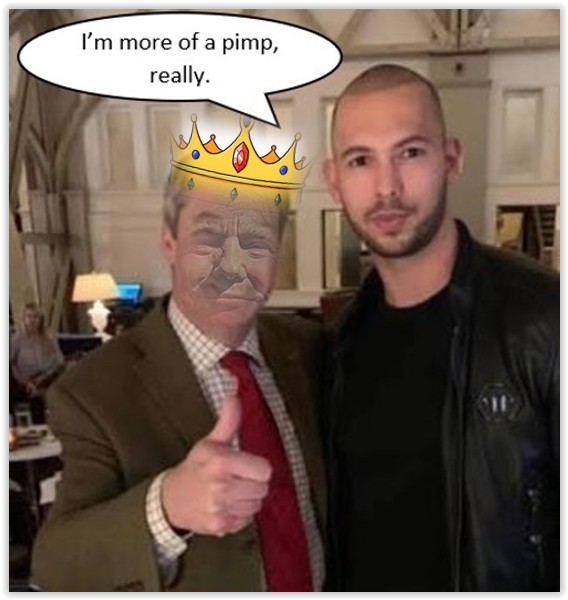
“What the hell’s wrong with a D-bill?” he asked the imp.
The imp swallowed hard, then said, “Mmmh, paper money… you know that thing we’ve been doing —with AI, and digital coins?”
“The ones with my head on?” asked Donald.
“The very ones,” said the imp hopping up onto Donald’s plastic ottoman that the nurse used as her to-hand store.
“All that stuff that’s supposed to be making us rich?”
“It is,” said the imp. “Will.”
“So how come you told this dork, who makes foam rubber underpants?”
“I didn’t,” said the imp.
“Well, who did? Because it wasn’t me!” Donald shouted, kicking his duvet over the imp’s head.
The imp emerged near the door to the ensuite, and quickly ran to the rug next to Donald’s bed.
“Everybody’s getting wiser,” said the imp. “We must work quickly, and keep what we know to ourselves. Sir, please, I will explain if you insist, but for now, let us work in the sure knowledge that paper money is worthless.”
“Even with my head on them?”
“Those notes maintain a slightly higher value, obviously,” said the imp, “but yes, paper’s…”
“Not worth the paper it’s written on?”
The imp nodded.
They settled into a silence while the imp thought about how best to explain the demise of paper currency, and the problems that caused to the economy, to his king. He paced the room, his little hand cradling his chin.
“This isn’t going to be about science, is it, Diddler? Science has nothing to do with making money. Deal making can’t be taught. I used to own a university.”
The imp decided to say something boring and businessy. Something that sounded like an answer, but which would not interest Donald, so that they could move the conversation on to where it needed to be. “The new data centres aren’t fully up and running yet.”
“Hold on a minute, Diddler. We can’t get paid in cash, and now we can’t get paid in AI? What are you trying to pull here?”
The imp decided not to correct Donald’s misapprehension that AI was a currency. Instead, he said, “AI will bring its own rewards, greater than we’ve ever known, and by this means, because we will own the new means of production, we will be paid handsomely. The era of AI will bring with it a new era of digital currency.”
“Will? Will! When!” Donald roared. “They don’t want paper money, and no one knows what a D-coin’s worth! We’ve got nothing. And we’re the king!”
“All great changes, have a moment of transition, sir,” said the imp.
“I pay you to manage these changes,” Donald shouted.
And though neither the pay, nor the obligation to manage part were true, the imp thought to himself, for he was wise in his way, “These are the moments where I pay the privileges I’ve obtained.”
He took a moment, to make it look like Donald had made a telling point. He looked at his feet, which weren’t very far away, and so didn’t buy much time.
“I see your point,” he told Donald, “The better way to look at it perhaps, is this: it feels expensive because we have to pay for everything in old paper money. That’s how we value things. If,” he checked to see if Donald was still listening and hadn’t picked up his phone, “…if we were costing and paying for our data centres in gold, they wouldn’t have gone up in price at all.”
“Well, do that then!” said Donald.
The imp stuttered as he tried to form a response. “That, that… that sir, is the response of a true genius.”
Donald smiled. “I know.”
“The challenge facing us now, is how to acquire that gold.”
“That’s simple,” said Donald. “We’ll tax the people who are making money, then buy some.”
The imp paused before speaking. “Sir, there’s rampant inflation. The people only have paper money, and it loses its value daily. They have nothing to tax.”
Donald laughed, “Prices are going up, but no one’s making any money? You’ve got a lot to learn about business, Diddler.
Prices are going up everywhere because I’ve created the greatest economy the world has ever seen” he said. “Look at the stock exchange! And think of the price of going anywhere by plane —it’s a fortune! And holidays. And great restaurants. They’re so expensive, no one can go to them —only rich people. Everything’s booming. What I want to know is when is any of that coming to us? All we do is keep paying out, and having it thrown back at us.”
It was difficult to disagree with Donald in an argument, especially about economics, or science, or history, or technology, and politics, because he didn’t know how anything worked.
And though he had experienced the manifestation of his wrath many times already, the imp persuaded himself that it was worth one more go.
“The only people making actual money, sir, are those who own gold, and if we put their prices up with high taxes, gold will go higher. It’s a seller’s market, and at the moment, sir, we’re buyers.”
“They can pay their taxes in gold then,” said Donald.
The imp couldn’t quite manage the smile that he knew Donald would expect, so he left, and went back to his work.
As soon as the imp had left, Donald picked up his phone and called Natalie, “Bring me the people whose produce has gone up in value, they must be asked to pay more tax.”
She came to his private office a few moments later, with her mobile info-unit stacked onto what had once been an old lady’s shopping trolley. She handed Donald the first report, then waited for further instructions.
“We’re still importing bananas, even after my tariffs!” he shouted, “For Christ’s sake we grow fucking pineapples at Mar-a-Lago, I’ve seen them at the back of the seventh tee. And can you believe how much a gallon of gas costs?”
“I know,” she said, “that’s why I made this trolley, and why I run everywhere.”
“Get me the imp on speaker,” said Donald.
“I know,” said the imp. “All energy; metals too. Everything we need to run data centres. That’s why it’s so…”
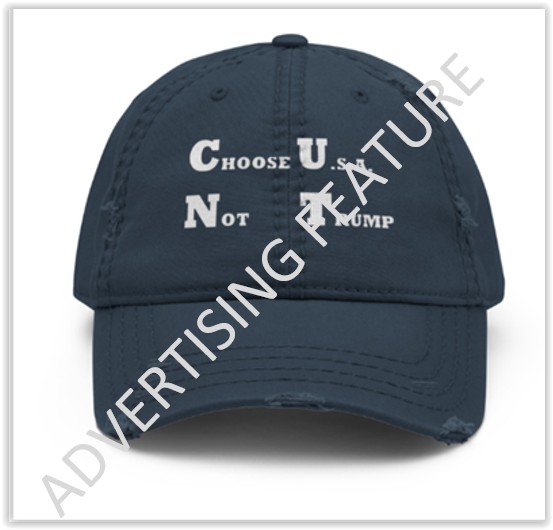
“You just told me they ran on gold,” Donald shouted.
The imp took a breath, then speaking slowly and deliberately, said, “Yes, the cost of building data centres would be cheaper if we had gold to settle our bills. But once they’re built, they will need energy and copper, and lots of it, if they are to be successful.”
“So, the oil guys are making money too?”
“Their prices are up,” said the imp, “but I wouldn’t say they…”
“They’re our guys,” said Donald, “But they’re going to have to show some loyalty if they want us to look after them. Leave it with me, I know how to speak to them.
Turning to Natalie, he said, “We’re doing a campaign to get this economy booming again. Get me some dates, I need to put a firecracker under my people.”
As she left the small office, he shouted after her:
“Get me some new caps made, “Treasure Workers Again Too.” I want my people to feel loved. In the meantime, roll the presses, and give the oil workers more money. We need people pumping oil, and we want them to feel wealthy again.”
He’d show them what being in business meant. He’d been there in the 1980s when business was first invented. The Prince of Economic Development Opportunities, they called him then. The King who made Intelligence Artificial, that would be next.
As soon as the caps were printed, Donald set about organising the centre point of his campaign —a speech to his people. He had Natalie announce a national holiday, then arranged for all the workers he perceived to be doing well from the new inflation, to be gathered outside the castle where he would address them from the balcony.
“Look to your pension plans,” he declared. “Look at the share price of energy companies. Your wealth is taking off like a rocket…”
“The only thing rocketing is my mortgage, mate,” shouted a lone voice from the crowd.
He picked up the volume, “Look at the price of eggs! A hundred bills for a dozen eggs! —they’re getting a hundred bills. The egg farmers, one-hundred. They’re doing great, the egg farmers. They’re flying. Like their chickens.”
A single egg flew from the crowd and smashed on the castle wall behind him.
He tried again. “Look at bread —fifty bills a loaf, the bakers have never had it so good!”
A greying handful of wet dough came sailing from the crowd and hit the balcony in front of Donald, from where it slowly dripped and stretched to the steps below, where his guards stood facing the crowd.
Soon, people in the crowd started to murmur their discontent to each other. “Does he not understand that we are starving? Does he not know that our wages are insufficient to feed our families? And that is for those of us lucky enough to have a job!”
It began with softly spoken indignations exchanged between friends, then moved to conversations with strangers that stood close by, and slowly the noise grew, so that soon there were people in the crowd who were openly shouting hostilities towards the king and his entourage. What eggs and rotten food there were, was thrown towards him. And before long everyone was booing and jeering, until he couldn’t make himself heard above their jeers.
The discord followed on after the speech, so he banned all the remaining internet platforms on which comments could be posted and exchanged. Only his own, tightly managed, Troth Essential was left. The newspapers that reported the event were shut down too.
The miner and his daughter had attended the speech. Like many of the other people there, they were swept up in the herding manoeuvres by the king’s men, who had started at the river, and from there, kettled everyone they found in their path up towards the castle. Shops were ordered to be closed as people were told of important new announcements that were going to be made from the castle balcony.
But like a majority of the crowd, it must be said, Agathe and her father did not go unwillingly. They were all so desperate for an upturn in their fortunes, they possessed an eager curiosity about the event. And not a little number of them were beguiled all the more, by what they knew to be going on at the castle —that over the last few months or so, some of their friends and neighbours had gone there, at first in ones and twos, and then in steady trickles, to work at the castle.
It had been assumed that they had gone to help in the Royal Mint, which seemed to pump out Donald-bills like never before. But what was interesting about their recruitment, was that only the very best and brightest of their community had been recruited. What made it all the more fascinating was that to date, none of them had returned home.
“One thing is for sure,” said her father, as they made their way to the event, “whatever they are doing for work, they will be well fed and looked after at the castle.”
He didn’t quite have the nerve to say, “If you get a chance, take it.” But he knew if one came along, he’d urge her to go, because, whatever the work was, she’d be better off there than she would be at home. He needed her, and would suffer without her. But it was time for Agathe to look to her future.
That Donald used the first part of his speech to tell the assembled masses how well he was doing on their behalf, and of how many new wars he’d avoided for them, had been a disappointment. Didn’t he think they read the posters? Then going on to tell them about the booming economy? Well, you didn’t have to the brain the size of an imp to see that that wasn’t true.
Oh, and as for the treat they’d been promised, who wanted to see one of his courtiers fighting a bear on the lawns of the castle? Well, the fight would be on the lawns, the poor people from the town were allowed to watch it from the top of the castle wall, were any of them capable of climbing up there.
But what really put the tin lid on it, was that bit at the end when King Donald started shouting, “Commies and faggots,” at the top of his voice, as he was led away from the balcony.
coming soon... PART TWO
go to it here: [https://dickiewhitesdiary.com/2026/08/21/aug-21st-pleased-to-meet-you-hope-you-guess-my-name/]

When they met again a few days later, even the imp felt empowered to question his master. “I thought you had loads of supporters?” he asked.
“Radicals!” said Donald. “They pay their supporters, and they bus them in. Did you see it out there? My guys were having BBQs off the back of their carts in the cart park; and those cheats got in and took all the best spaces.”
“Who did?” asked the imp.
“Socialists! Disrupters. Anarchists,” said Donald. “They weren’t hard working people, like my supporters. My people wouldn’t throw an eight-dollar egg at a wall.”
Tune in next time for the rest of part two…


I want a Choose USA Not Trump cap! I’m going to wear it at the clam bake.
LikeLike
Poor old Dodo, he does seem to have got a bit tired of winning lately. Perhaps he should go and have a proper nap, like Mitch McConnell. You know – take a bit of eternity leave.
LikeLike
Troth Censhal 🤣🤣🤣
LikeLike
🤣🤣🤣 nice touch – the miner for the miller.
LikeLike
just bought kindle – thank you for the 99p. Dear me, the ending – do hope they don’t come after you.
LikeLike
Well these just get better im already waiting on part two .
Keep up the good fight
LikeLike
Ooh, nice who is it? I am going to resist getting the kindle version, and keep with the instalments. The imp can’t be Tate because he’s in a picture…. I think it has to be Musk… I think I saw it on Troth Senshal! 😂
LikeLike